
Thyroid Conditions
We provide treatment for thyroid conditions, including thyroid cancer, in Canton, Jasper, and Blue Ridge area residents. Click each topic below for more information:

Thyroid Disease
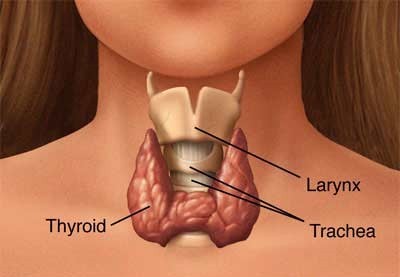
Thyroid disorders are very common ailments that are most common in middle-aged women but can affect men or women and children or adults. Thyroid problems manifest as disorders caused by overactive (hyperthyroidism) or underactive (hypothyroidism) thyroid function, autoimmune conditions (Graves’ disease and Hashimoto’s thyroiditis) caused by the immune system inappropriately attacking an otherwise normal gland, growths or nodules of thyroid which can grow to the point where they cause compression of other nearby structures, such as the windpipe or esophagus, or malignant tumors. Most malignant thyroid tumors have a very good prognosis after they are appropriately treated.
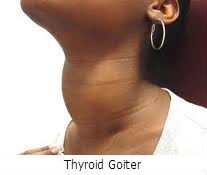
We are seeing an increase in the incidence of thyroid disorders, specifically thyroid cancer, in the United States. One reason is due to exposure of the thyroid gland to ionizing radiation, such as from nuclear energy disasters or the use of radiation to treat other malignant or benign conditions. Another reason that thyroid cancer incidence is increasing is that doctors now have more technology availabel to detect thyroid nodules that harbor cancer.
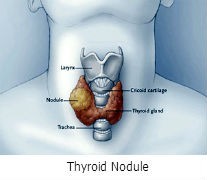
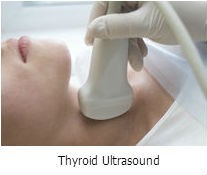
Thyroid nodules can be evaluated by many different modalities, but the most useful technique is ultrasound. Ultrasound can be used to characterize nodules and help determine whether or not a nodule needs to undergo a biopsy. The most common technique used to biopsy a nodule is called fine needle aspiration (FNA).
Once an FNA has been performed, a nodule is categorized as benign, indeterminate, or malignant. Benign nodules can be observed safely. Some indeterminate nodules may also be observed. Malignant nodules typically require surgical management. Thyroid surgery typically will involve removal of one lobe of the thyroid (partial thyroidectomy or thyroid lobectomy) or the entire gland (total thyroidectomy).